

This piece about Carlson Roasting Co. is part of a larger project to document the culinary resilience of southeastern Minnesota’s Houston County during the pandemic. You can read more about Elisabeth’s Crystal Creek Citizen-Artist Residency project here.
With a population just shy of 20,000 people, Houston County offers residents and visitors an ample supply of locally-produced meats, cheeses, honeys, mushrooms, baked goods, fruits, vegetables, and other comestibles. And if that doesn’t sound impressive enough, it also has a strong coffee game.
To learn more, I visit Carlson Roasting Co. in Houston, MN on a hot July day.

Bob Carlson is a coffee fanatic. And not just a fanatic about drinking coffee, but roasting, charting, testing, and experimenting with it, too.
I arrive at Carlson Roasting Co. with a belly full of beef brisket after a tour of Fat Pat’s BBQ. Bob dives right in to the technical details of roasting. He shows me the computer system attached to his coffee roaster controlling the rate of rise, a metric that’s key to consistent roasting. He flips through multiple Excel spreadsheets. “Every coffee has a set profile that we try to follow, like a roadmap,” Bob describes. This profile drives the settings for the roaster. It’s a warm day, so he needs to adjust for humidity and temperature.
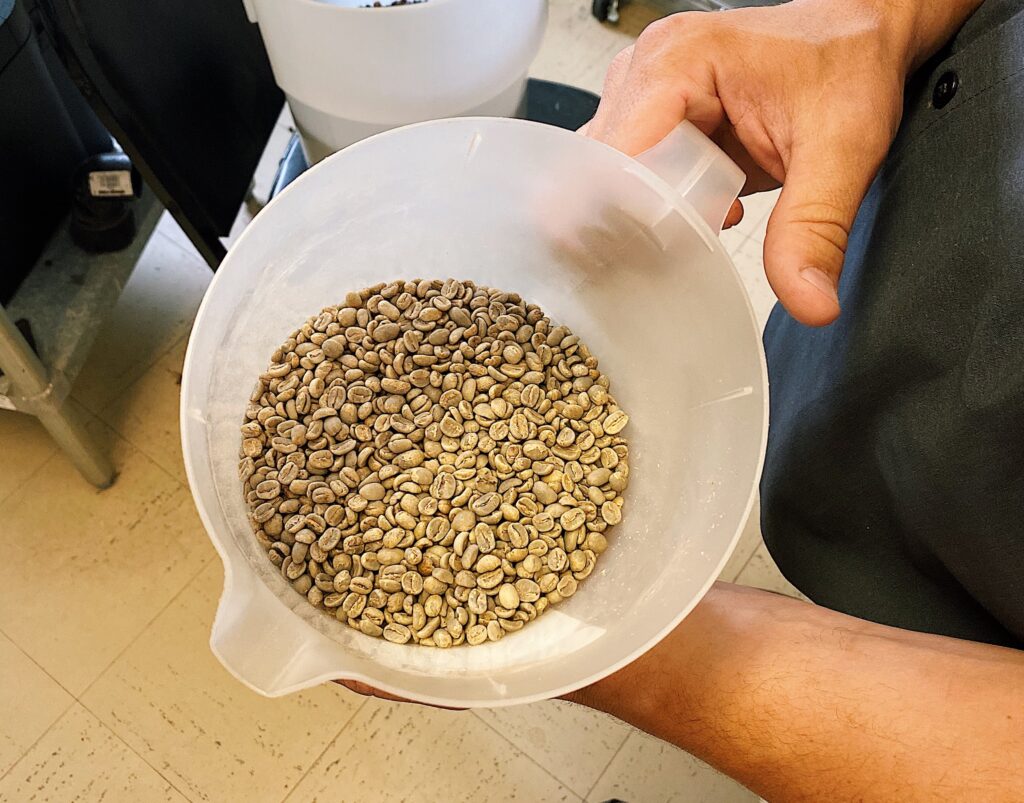
We watch the beans change from grassy to yellow as the Maillard reaction caramelizes the sugars and the scent of toasted oats fills the air. Bob makes sure the coffee is roasted through but doesn’t want to eliminate flavor by over roasting. “The important thing is knowing your market,” Bob advises. “It’s a Medium to Medium-Dark market around here,” he adds.
Bob gives me a basic lesson on coffee flavor profiles. Every region has different soils, environmental factors, and altitudes that affect flavor. Just like wine has terroir, coffee has location. “That’s what’s fun about coffee. You get to explore and try different flavors from unique regions of the world,” Bob says with a smile.
We hear a popcorn-popping sound as water escapes the beans. “They’re opening up nicely,” Bob notes. Once the machine hits a certain temperature, the beans come out to cool down. “And that’s how you make coffee!” Bob exclaims. “Once it cools, we bag it up and off it goes.”
Next up, a cold brew lesson. A lot of coffee shops brew cold brew at room temperature, but Bob likes to do true cold brew in the walk-in cooler. I watch as Bob grinds the beans, pours in the water, and lets it sit for 30-45 seconds to activate the coffee. This process, known as blooming, extracts a better flavor.
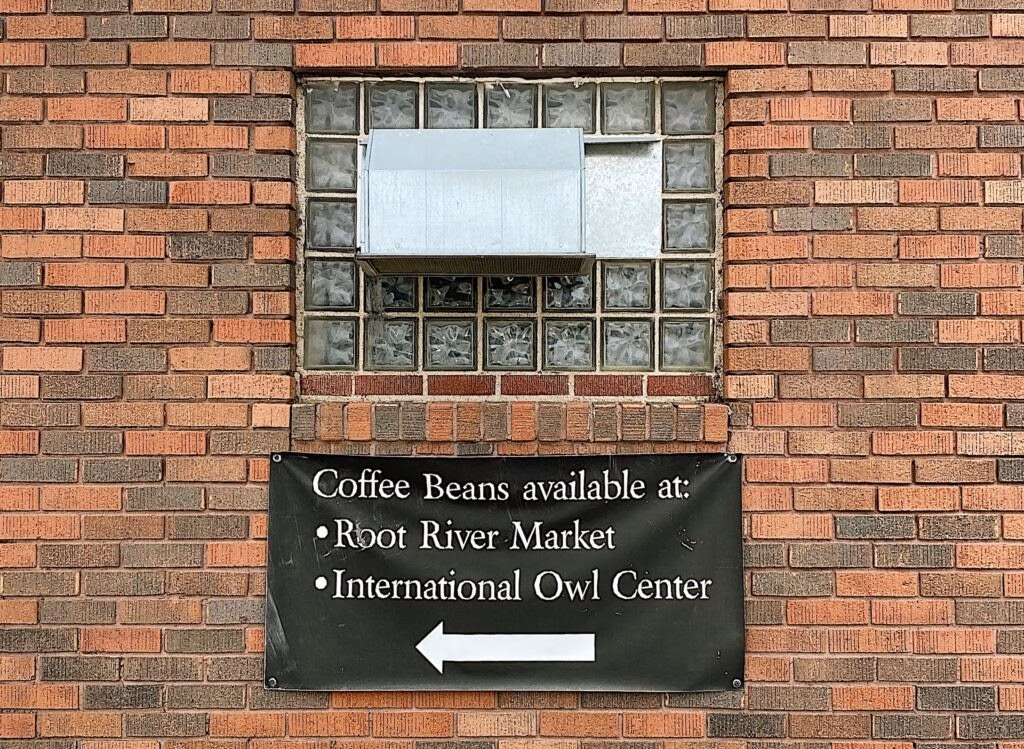
I sample some cold brew concentrate, first straight and then watered down with equal parts water and cold brew. It’s incredibly smooth and delicious. Carlson Roasting sells bottles of this cold brew concentrate at Root River Market in Houston and People’s Food Co-op in La Crosse, but the cold brew enthusiasts want more. “People are asking for gallons of this stuff!” Bob exclaims. He planned to focus on that project this summer but then COVID-19 happened.
During the summer months, Bob sells coffee beans, cold brew concentrate, and nitro cold brew at farmers markets throughout the region. He rattles off the list: Fridays in La Crosse, Saturdays in Winona, Tuesdays in Rushford, Wednesdays in Spring Grove. Bob is a busy guy.
We turn to espresso. “Espresso’s a fun one,” Bob says. “It’s all about pressure.” With espresso, I learn that you should be able to drink it straight without it being horrible. Carlson Roasting has an espresso blend which I happily sample: Electric Owl Espresso.

“Espresso is like a magnifying glass for coffee. You take all the flavors and you intensify them into this little tiny portion,” Bob explains. “Everybody has a different recipe, that’s what makes it fun. And there’s not one right way to do things,” he adds.
I ask about his current favorite coffee: Ethiopia Guji from Kayon Mountain Coffee Farm. “It’s probably the best coffee we’ve ever produced,” Bob says.
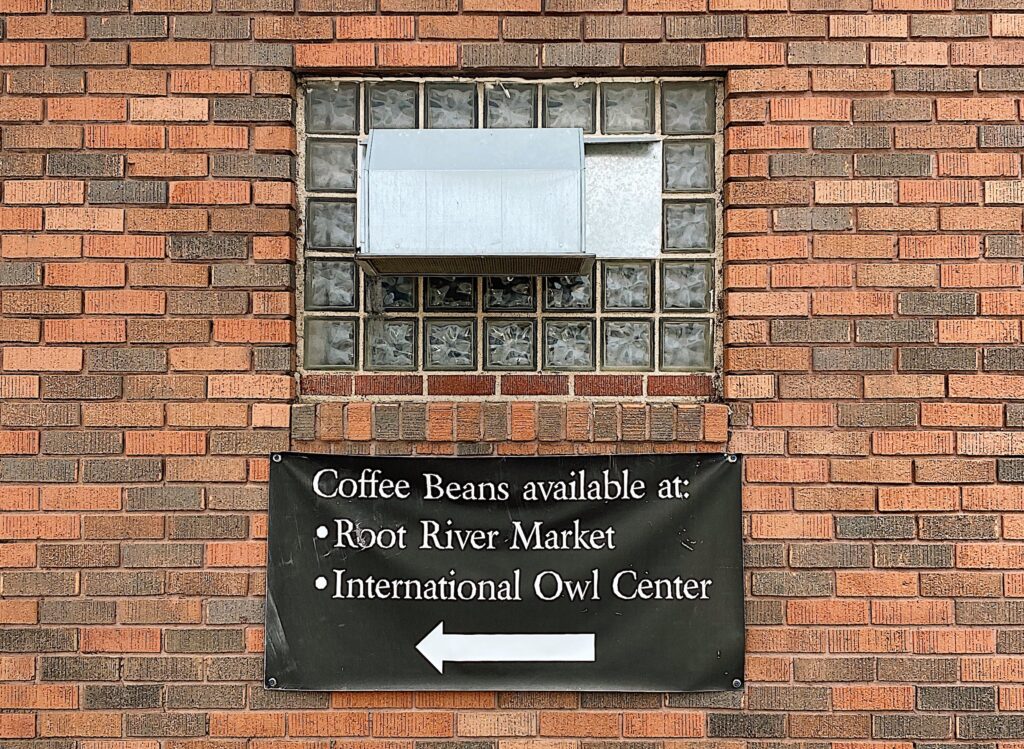
Carlson Roasting Co. started in 2015. Their fair trade organic coffee is available on their website and at twelve grocery stores and six coffee shops in the region including The Wired Rooster, Free Range Exchange, and Red’s IGA.
When COVID-19 first started, Bob had no idea what to expect.
“We feel very fortunate,” Bob shares. “We had some of our best months ever,” he admits. “It was a little scary at first when shops closed and orders stopped, but then grocery store demand went up. March and April were really good for online sales then May was down and June bounced back. So why the up, down, up? We’ll see how it all plays out.”
More people are working at home and wanting good coffee to drink, boosting online consumption. “I think that’s a long term trend. Now that people know they can, I think they’ll demand to work remotely,” Bob says.
Bob hands me a bag of Ethiopia Guji on my way out the door and tells me he plans to enter it in a contest. After returning home and brewing some for myself, I understand why.
If I were the judge, I’d give it full marks.
